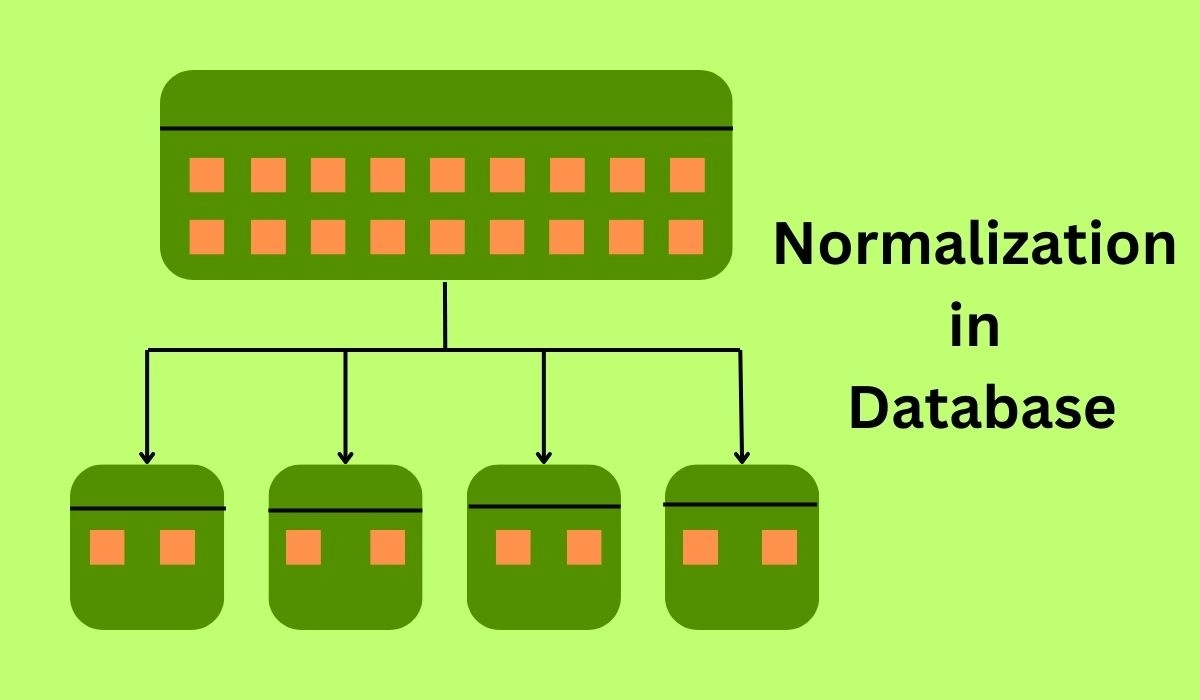
In the vast realm of databases, the concept of normalization plays a crucial role in organizing and structuring data efficiently. Imagine your database as a well-organized library where every book has its place, making it easy for you to find what you need. Database normalization aims to achieve this kind of order, making data retrieval and management a breeze.
Understanding the Basics:
What is Normalization?Normalization is a process that helps eliminate data redundancy and dependency in a database. In simpler terms, it's like tidying up your room, removing unnecessary duplicates and ensuring each piece of information is in its designated spot.
Why Normalize?
Imagine storing a customer's details in multiple places. If the customer changes their address, you'd have to update it everywhere, risking inconsistencies. Normalization prevents such headaches by ensuring information is stored in one place, making updates more straightforward.
The Normal Forms:
First Normal Form (1NF): In 1NF, each column in a table must hold atomic (indivisible) values, avoiding groups or lists. For example, if you're storing addresses, don't lump city, state, and ZIP code into one column. Instead, have separate columns for each.Second Normal Form (2NF): Building on 1NF, 2NF ensures that non-key attributes are fully functionally dependent on the primary key. If a table has a composite primary key, each non-key attribute should depend on the entire key, not just part of it.
Third Normal Form (3NF): In 3NF, we further eliminate transitive dependencies. This means that non-key attributes should not depend on other non-key attributes. Each piece of data should be directly related to the primary key.
Benefits of Normalization:
Data Consistency: With normalization, updates and modifications only need to be made in one place, reducing the chances of inconsistencies.Efficient Storage: Normalized databases tend to be more space-efficient as redundant data is minimized.
Simplified Queries: Writing queries becomes more straightforward since you're dealing with well-organized, streamlined data.
Conclusion
Normalization is the backbone of a well-structured and efficient database. By organizing data intelligently, it ensures that your database remains consistent, easy to maintain, and scalable as your information grows. Embrace normalization, and you'll find yourself navigating the complex world of databases with greater ease and confidence.